
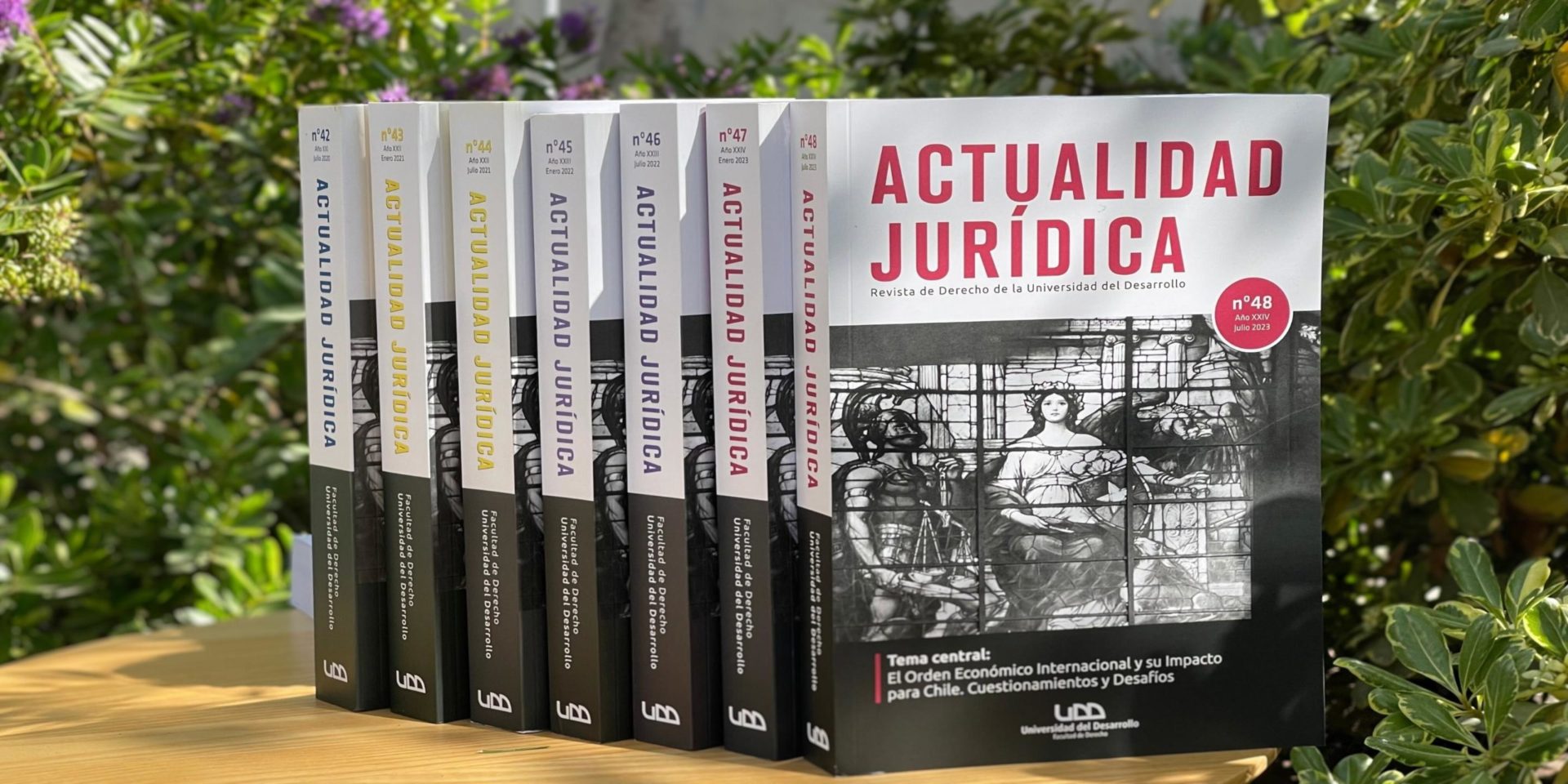
La deslegalización del sistema de evaluación de impacto ambiental: de la colaboración ley-reglamento a la obligatoriedad de las guías
Resumen
La regulación ambiental chilena se ha estructurado en función de instrumentos de gestión ambiental que implementan el derecho a vivir en un ambiente libre de contaminación y el deber del Estado de proteger y velar por la preservación de la naturaleza.
Uno de estos instrumentos es el Sistema de Evaluación de Impacto Ambiental (SEIA), cuyo procedimiento está a cargo del Servicio de Evaluación Ambiental (SEA), el que, sobre la base de una declaración (DIA) o Estudio de Impacto Ambiental (EIA), determina preventivamente si el impacto ambiental de una actividad o proyecto se ajusta o no a las normas vigentes. No obstante, a pesar de su naturaleza reglada, este procedimiento ya no descansa únicamente en la Ley n.° 19300, de Bases Generales del Medio Ambiente (LBGMA), ni en el Decreto Supremo n.° 40/2012, del Ministerio del Medio Ambiente, que establece el Reglamento del SEIA (RSEIA). Durante los últimos años, la autoridad ambiental, mediante un conjunto de ordinarios, instructivos, circulares, guías y criterios de distinto tipo y fuente, ha intentado –de manera dis-persa e inorgánica–, dotar de contenido sustantivo y procedimental la regulación del SEIA. En ese marco, el objetivo de este trabajo es documentar y analizar el fenómeno descrito, dando cuenta de cómo se ha ido erosionando la ley y el reglamento como fuentes primarias de regulación del SEIA, un procedimiento especialmente sensible para el desarrollo del país, situación sobre la que el Congreso Nacional no parece haber puesto mucha atención en las últimas refor-mas legales aprobadas o actualmente en tramitación.
Abstract
Chile’s environmental regulation has been structured around a set of instruments designed to implement both the constitutional right to live in an environment free from pollution and the State’s duty to protect and ensure the preservation of nature. Among these tools, the Environmental Impact Assessment System (SEIA) occupies a central role. The procedure is administered by the Environmental Assessment Agency (SEA), which, on the basis of either an Environmental Impact Statement (DIA) or an Environmental Impact Study (EIA), determines in ad-vance whether the environmental impact of a given project or activity conforms to applicable regulations. Notwithstanding its legally regulated nature, this procedure has gradually ceased to rest solely upon Law No. 19,300 on the General Bases of the Environment (LBGMA) and Supreme Decree No. 40/2012 of the Ministry of the Environment, which establishes the Regula-tion of the SEIA (RSEIA). In recent years, the administrative authority –through a diverse set of official letters, instructions, circulars, orders, guidelines, and interpretative criteria– has sought, in a fragmented and uncoordinated manner, to provide substantive and procedural content to the SEIA’s regulatory framework. Thus, the purpose of this paper is to document and analyze the phenomenon described and to explain the factors that have led the SEIA into a process of progressive delegalization. The study shows how the law and its corresponding regulations have been progressively eroded as sources of regulation for a procedure that is particularly sensitive to the country’s development –an issue to which the National Congress appears to have devoted little attention in recent or ongoing legislative reforms.